Showing posts with label Application. Show all posts

Is Indian Grocery Supplier Startup Big Basket Heading Towards Non Reversal End

06:52:00

In 2015, Online Grocery application buzzed Indian market in big way and also attracted all leading investor community which poured in around $500 million. On paper it looks very impressive and similarly their concept were very attractive.

The Capital intensive segment forced all players to investment in warehouses and delivery chain while the placement of order did not picked up. Most of the Grocery player went ballistic in hiring the best branding company to handle their brand as well as invested very heavily in print and digital media. We all know that how companies like Gofers and Pepper Tap struggled in the market place and downsized their operation leading to major losses.

On a contrary; Big Basket managed to convince existing and new investor about their march towards profitability and positioned itself by partnering with Shops, selling private branded product. Delivering more than 50k order every day collected across more than 18 cities they operate.

Coming to my concern and I am sure that Big Basket management will be even more concerned about it, is the conversion ratio. I do not think that even 300k delivery per day will be sufficient for them to be profitable. I observed that they come out with full or half page advertisement in print media more or less thrice a week and also believe that the intention is to attract organic user base. On Google Play they have less than 5 Mn user base ( On the higher side of the assessment) and must have spent  millions of $ in advertisement.


In my point of view; They should take the direct user acquisition strategy and can achieve that through direct integration in Smartphone. Believe me the return will be better than what they are getting right now.

The continuous billboard to print media advertisement and that too on front page is not going to help them given the fact that their application rating on Google play is only 3.9 which clearly shows that users are not happy with the performance of the application.

I will not be surprised, if one good day Indian newspaper and digital media will be flooded with Big Basket holding company decision to restructure the operation to cut down the cost but I will be very happy to see if they announce that they are profitable on PAT level.


Panasonic Mobile - Transition In Two Years From Bottom To Leader Quadrant

01:49:00
Panasonic Mobile once considered as dominant player across globe shocked world when they decided to pull out from Mobile Device production segment post multiple quarter of loss and mounting competition in 2013. At the same time, Panasonic catches the potential of selling Rebranded Panasonic Device in India and other parts of the globe through outsourcing model.


When Panasonic Launched their first device under rebranded outsourced model, the organization faced uphill task to move the inventory and decided to move slowly with product while improving the channel and sales team.
The team under India Panasonic Mobility head Mr.Pankaj Rana did fabulous job while designing the devices and more importantly focusing on device performance through rigorous testing model to reduce post disastrous misstep when some of the devices were launched with heating problem.


The coordinated branding by hiring the brand ambassador helped Panasonic Mobile to popular in youth segment as well as focused design started attracting Indian Smartphone buyer. By keeping the device price segment in two domain of 6k to 10 INR and 10K onwards; Panasonic strategy worked seamlessly to capture both prosumer and consumer segment.

Based on recent interview of Mr.Pankaj Rana across leading print media and his confidence of reaching 2500Cr to 3000Cr with 25 plus device launch during remaining part of 2016 is more on the conservative side. I also observed which many may overlooked that Panasonic Mobile will come out with low end Smartphone loaded with all feature should be considered as warning bell for many established player's in the Industry. The Total shipment of 3Mn device forecast by him is also on the conservative side.

Here Are The Reason Why I Think That His Statement Is On The Conservative Side

  1.  Even during the downturn in Smartphone sell through in the last couple of month, Panasonic Shipment is growing while competitor is struggling to maintain their shipment level.
  2. Every month shipment growth is around 12 to 15% and the percentage of data user is very high. It is a clear indication that Panasonic Mobile is very popular in prosumer segment.
  3. Most of the Panasonic Mobile User bases are data user.
  4. The Smartphone market will attain the growth path once replacement cycle will start from Sept or Oct 2016 as in India, replacement cycle is 1.8 years.
  5. Indian Smartphone market size for 2016 will be around 110 Mn and hence it will offer Panasonic to capture market share through their planned launch and especially enter into low margin but volume game centric cheaper device.
  6. It's the unmatched strategic and tactical maneuver of India Panasonic CEO Mr. Manish Sharma and Jaina Marketing India (P) Ltd MD, Mr. Pradeep Jain.

In My Point Of View And Assessment Done By My Organization

Panasonic will be selling around 4 Mn device in 2016 and will be in top 5 Smartphone seller in 2017 . Hats off to Panasonic Mobile outsourcing partner Jaina Marketing India (P) Ltd ; CMO Mr. Shashin Devsare visionary modulation of brand enhancement skill set. Keep going....

Read more here 

The Ongoing Indication from Indian e-Commerce - Consolidation is Inevitable

04:57:00

Most of the e-commerce companies are making round of news for all wrong reasons. The latest one is the delay in honoring their commitment to Campus selected student into professional world. The even interesting part of lack of communication from e-commerce companies with proper answer to such universities so that universities plan for the alternative for their budding high quality brains. It seems that e-commerce companies started a feel that by the end of 2015 that they are governing the economics of India and went from humble to arrogant mode.


In my point of view, recent regulation and missteps landed them in a soup

  1. Regulation around Discounting
  2. Stiff Discounting to acquire and retain userbase
  3. Hiring Named and Famed professionals without any defined Roles
  4. Very high attrition rate is very high as experienced resources donot need Brand but Brand needs them and hence many of them left abruptly and all project running under them went underwater
  5. Left and right acquisition without clear vision on Integration and synergy
  6. Product Quality sold on their portal
  7.  All e-commerce companies fighting for the limited number of userbase and In India; e-Commerce centric userbase is not more than 140 Million
  8. Problem around order something and receive something dented their image
  9. Their main revenue stream relied on Electronics and that too Smartphones supported by heavy discounting by e-commerce sites
  10. Lack of Innovation and Cross Collaboration
  11. Lavish expenditure on Offices and resources. Recently many e-commerce companies announced that they are closing their office in tier 2 and Tier3 cities
It lands us to think that E-Commerce companies relies mainly on metros and sub-metros cities based userbase. Also concluded that retention of the userbase is very low and also the process of registration with their applications to portal is bit cumbersome as per the Indian user standard. The stiff competition and continuing discounting as well as in/out acquisition of companies coupled with many investment landed them in cash crunch.

When they thought of raising the fund and started preparing for the same; Analyst firm started marking down their valuation and put them in Cat and Mouse game.


In my point of view, 90% of the Indian e-Commerce companies will ultimately land into closure mode and rest of them will be forced to join hands to survive. They must also realize that most of the Indian State imposed taxes on their shipped products and in-turn the last mile benefit offered by e-commerce companies coming to an end and they must think of alternative revenue to be viable in the market place. We all should introspect that why our e-commerce companies are not making profits whereas the international e-commerce companies operating in other countries making profits. It's better to join hands and fight collectively instead of fighting internally.
Apple Investment in Chinese Didi Chuxing - Opportunity for Collaborator vs. Threat for Competitors

Apple Investment in Chinese Didi Chuxing - Opportunity for Collaborator vs. Threat for Competitors

03:03:00

Apple is known for their bullet proof secretive research initiative and offer shockwaves with innovative products. Mostly believed in in-house research panel and team but shocked the technology world with their investment in Chinese ride-hailing service Didi Chuxing. The tune of $1 Bn investment at a valuation of $20 Bn also shocked many and perceived it as Apple attempted to be popular among Chinese userbase using Didi Chuxing as advertisement platform.
Recently, ride hailing services companies are attracting huge investment which include General Motor's investment of $500 Mn in Lyft at a valuation of $ 5.5 Bn whereas UBER valuation stand around $64.5 Bn.  I will write another post on the overvalued scenario in separate article.
I observed that most of the analyst came out with similar comments that Apple is losing market share and hence invested in an organization wherein they can use Didi Vehicle for its phone advertisement to shore up their sales as Didi also forayed into car selling and received overwhelming response as they have more than 300 million and 14 million plus registered users and Drivers respectively.
It's the well know fact that Apple most important criteria for any penny investment revolve around very robust technology and future roadmap of product line and the collaboration validates the same for Didi. It is also a known fact that none of the ride - hailing app is profitable and in next few years they will not achieve the same.
It raises few pointers such as
  1. Does that mean that most of the investment investors are doing on the basis of userbase?
  2. Number of Drivers they have?
  3. Number of daily ride?
  4. By when the above mentioned companies will stop giving incentives to keep attracting userbase and Drivers?
  5. How they will manage the security issues faced by commuters in developing countries?
  6. And So on...
Given the above pointer, it prompts me to do some research to find out the other angle of Apple thought process which might be right.
Here are some pointers which I would like to highlight that
  1. Apple connected active device worldwide is more than 1.1 Bn
  2. In USA only, around 28-30% of High Net worth users are using Apple or connected devices
  3. Apple Brand is very powerful in many countries of European Union such as Switzerland where per capita income is one of the highest
  4. Apple Technology is known for its security and User are bound to give its complete information including Credit card information in order to access attached closed loop services offered by Apple to its registered user 
 Apple strategically invested in Didi and can leverage the investment into constant stream of service revenue. Apple only needs to enable Didi in their internal ecosystem which is protected by Apple. It will enable Apple user across Global to access Didi services if Didi and Apple chooses to enter into that segment. Forexample, In US, more than 80 Million active Apple users are there and they can avail Didi service on the fly. At the same time, its double sword earning potential of Apple service business unit. As Apple users are generally high net worth user and hence they do not require to attract users by discounting the ride as its Apple policy to maintain the brand and never go for discounting.
On a contrary, it would be cash drainage for its competitor in USA as they are on funding lifeline. For example, for me; it’s beyond my imagination that an application supported by few server is valued by 65 Billion $ which is equal to EMC which recently got acquired by Dell. EMC generated $ billions of profitability and UBER generated Billions of $ of loss to achieve the same. Just imagine if they manage to achieve $Bn profitability then they will cross the valuation of Microsoft.

In my point of view, I will not be surprised that there will be valuation markdown in such over inflated valued organization.
Apple never do anything in hurry and follow very stringent evaluation process and that is the mantra of their success. I have not highlighted their benefit part in China and will leave it on to Analyst to go deeper and think about it.
Very Good investment to improve its bottom line
This Article is written by devendra prasad : soruces

Regulatory Move On Domain Centric Security – Perquisite Of BYOD Adoption In India

01:12:00
The dynamic nature of mobility space in last few years created lots of buzz. At one end, the unimaginable surge of Apple promoted iOS mobile operating system (OS) based mobile device, Google promoted Android mobile operating centric devices whereas on the other end the demise of Motorola, Nokia device business sellout, Blackberry problems. The dynamic changes in the mobile operating system attached device ecosystem offered Enterprises new opportunity to opt for newer mobile OS powered packed with innovative feature set to access corporate data. The adoption of iOS and Android mobile OS based devices by Enterprise also brought another frontier to play with transition from Blackberry ecosystem as well as opportunities for innovative companies to come up with new products, services or Applications around new ecosystem.


India experienced unprecedented adoption of Android mobile operating system based device adoption and captured defunct Symbian operating system space which used to be dominating the marketplace. The open source Android mobile OS attracted many domestic device players into ring which propelled adoption by increasing efficient manufacturing and delivery mechanism. The rise in low cost Smartphone also attracted Android Application ecosystem players to offer both horizontal and vertical application targeted towards consumer and prosumer’s.

The iOS mobile OS attached Apple device also gained traction in India with adoption of subsidy route by most of the service provider to tap in high net worth Indian mobile users as post paid user to increase their ARPU. Blackberry BB10 mobile OS lost market share in India but still regarded as first priority choice it comes to Enterprise prosumer’s. Enterprise prosumer’s adoption levels are also changing and they want to have single device which fulfill both consumer and prosumer centric requirements.


Post Mobile Value Added Service regulation enforcement by Telecom Regulatory Authority of India (TRAI), mobile VAS providers are required to take mobile subscriber authorization before pushing any paid applications or product or service. The mechanism of double consent impacted mobile VAS ecosystem players and the monthly activation of mobile VAS went down in high double digit month over month. It is also expected that the legacy mobile VAS service would experience further erosion in user adoption and subsequently revenue fall.

The disruption in legacy mobile VAS service and focus in data centric service by mobile service providers attracted many new and existing mobile VAS developers. The low entry barrier for new Smartphone users, content portability by Enterprise for mobile ecosystem, plug and transfer mechanism of mobility ecosystem pushing Enterprise Mobility ecosystem in new horizon. Most of the Enterprises are contemplating to offer their internal and external clients mechanism to access product portfolio, tracking, product feedback and mechanism to capture new business opportunities. The major problem attached with low adoption of Enterprise mobility in India is nothing but content digitization, interoperability, portability, availability, reachability, scalability and security.

Recent regulatory as well as IT department initiative on Cyber security, Malware free Network equipment, Equipment hosting, Lawful intercept is going to have major positives for many Enterprise to adopt enterprises application on multiple OS supported devices. The malware free network equipment is going to filter unwarranted malware used to spoof user information and lead to hacking. The mobile security at device level is going to develop internal filtrations to keep the device free from any eavesdropping and in-turn remove the possibility of being used as mobility device Botnet by hacker to launch( denial of service) DoS, ( Distributed denial of service) DDoS and many other attacks on Enterprise servers. The lawful intercept regulation is going to offer Enterprise to have more confidence on Lawful agency to take care of any misuse of Enterprise assets for any unlawful activities. The stringent security regulatory guideline around BFSI sector possess new opportunity for BYOD adoption as mobile commerce, banking are on the rise. The enablement of security regulation to mitigate any adware, malware and phishing attack would open more BYOD user’s adoption of new horizontal and vertical application. It would also give higher level of confidence to Enterprise segment to connect their database with device hosted applications to enable user, employee and partner to retrieve, update centralized information management system real-time.

The servers including database hosting requirements as well as support regulation defined by government regulator where application providers are bound to keep mobile user information within Indian Territory. The implementation of above mentioned compliance will enable Service Providers to have higher visibility on data protection, transit, interoperability, portability; SLA which is going ease out stringent process to get BYOD registered with Enterprise owned IT infrastructure. Blackberry initiative to support cross mobile OS applications would act as change catalyst for higher adoption of Enterprise mobility. One can only hope that Indian BYOD adoption is going to witness exponential growth post adoption of above mentioned regulatory enforcement. It is going to hurt ecosystem players financially to comply with regulatory guideline but it also carries multiple cascading positives.

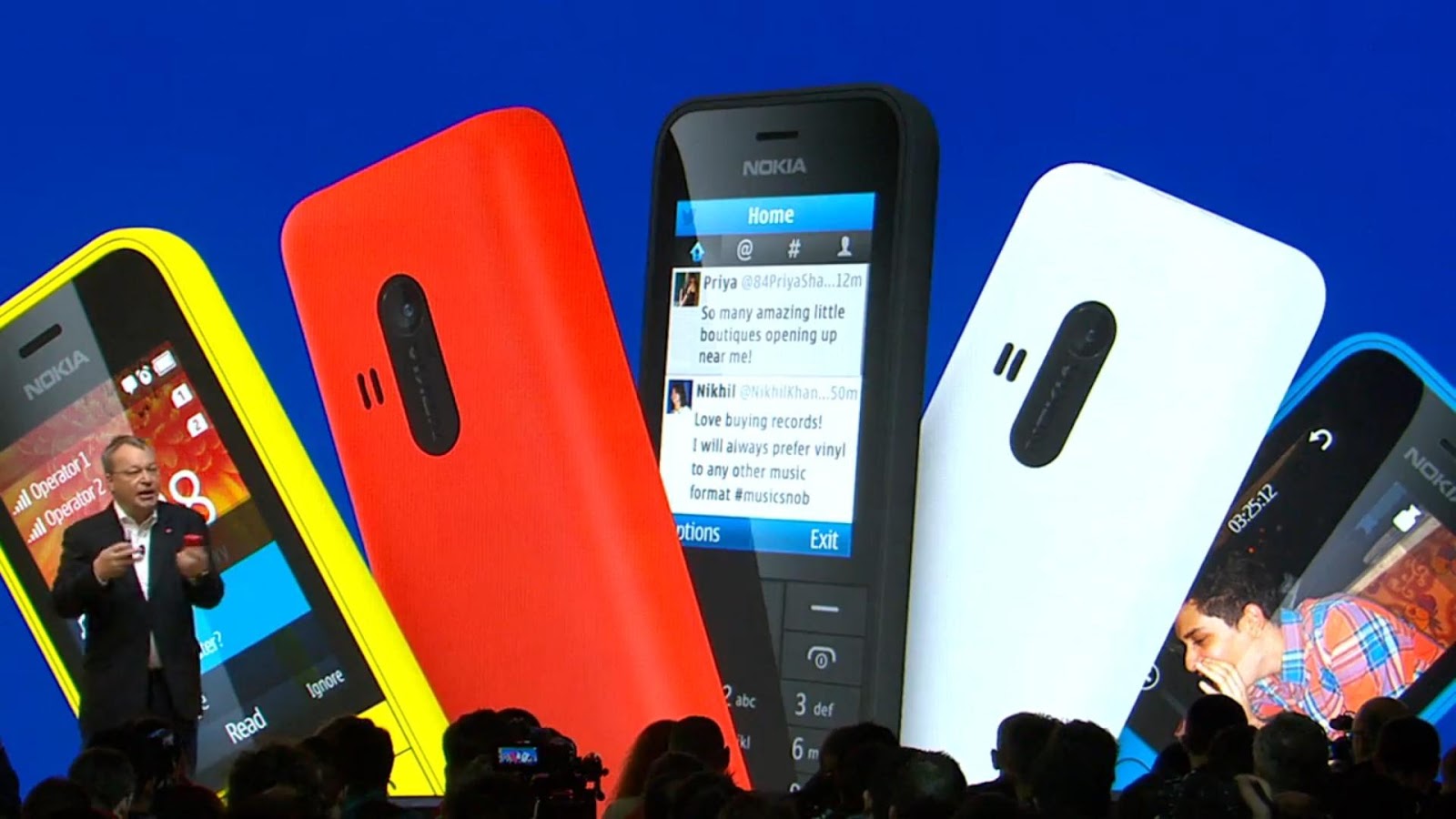
Microsoft Owned Nokia Devices Most Likely To Lose 2nd Spot In Indian Device Market By Q3, 2014

22:52:00
The recently published IDC report on Indian Mobile Market flashes many hidden happenings which is going to unfold in next 6 months. It’s encouraging that Nokia came back to top 5 players of Smartphone with average monthly shipment of 350K cornering 6% of Smartphone market. Prior to Nokia Device acquisition by Microsoft, Microsoft played smart move by using Nokia as vehicle to launch Android Smartphone to recapture lost ground and they succeeded a bit. Given the released shipment and timing of their Android enabled Smartphone clearly indicate that the adoption was lukewarm.


In the meantime, their Feature Phone shipment went down drastically and that impacted their overall device market share which is currently at 13%. Interestingly, domestic player’s calibrated focus on both Smartphone and Feature Phone brought them in striking distance to claim 2nd position in Indian device market.

Post Microsoft acquisition, their consumer campaign turned to focus technological superiority and highlight prosumer benefits such as document editing and all. They missed to capture that those target segment is already captured by iPhone and Samsung high end devices.


With the growth reviving and Nokia Chennai plant taxation issue will limit them to continue procuring device from the plant and would be forced to procure it from their manufacturing plant or partners located in APAC region. It is going to squeeze their operating margin as Nokia device segment major strength in Feature phone market is very low end devices where domestic player are positioning their products aggressively. In my point of view, Microsoft owned Nokia device is going to lose their 2nd spot very soon and I feel that Q3, 2014 Mobile tracker will show that. I would not be surprised that if that happen in Q2 only.

I strongly believe that Microsoft should change their strategy for Indian Mobile sector if any way they are willing to recapture Nokia lost glory and brand.

Indian Smartphone Shipment May Cross 100 Million in 2014

23:55:00

Recently, CMR and IDC came out with very different Smartphone shipment figure for Q1,14. All newspapers published IDC report today and brought cheer for many domestic Smartphone players. Many raises concern about falling feature phone shipment and put the blame squarely on falling Smartphone price point. In my point of view, Smartphone growth in India is still to come and expecting blowout quarter in second half of year. The recent months observed that all leading device manufacturers started flooding feature filled 3G device under $150 and high specifications premium Smartphone in the range of $250. The drastic fall in price point is going to propel the adoption of data centric device and thanks to Mobile operators for their changed goal of data centric product launches. The report highlighted that overall device shipment fall of 10% Q-o-Q and in one way indicating that India is shifting towards Smartphone.


I would like to highlight that the economic environment in India worsened at the start of 2014 and thanks to high CPI, WPI and high unemployment rate coupled with political uncertainty. The downturn in economy impacted the rural India the most and reduced the buying capacity of user. I strongly believe that post certain policy clarity and subsequent investment by Corporate is going to help generate jobs and will have cascading impact on India gadget buyers.

In my point of view, IDC projection of 80.57 million by year end is on the conservative side. I believe that with the economic revival on anvil as all indicators are positive side coupled with low price point offering from all major Smartphone player is going to attract new as well as replacement market. Needless to say that India will definitely observe spike in feature phone shipment too. The expected bumper Q3, 14 holiday season will help India cross 100 million Smartphone shipment milestones. The trend is good news for budget and feature rich device manufacturer whereas will put margin pressure on global players.

Indian Consumer Pains And Expectation From Application Providers– Tushar Singhal

01:47:00
India being one of the hot destinations for global and domestic mobility player to tap Indian mobility user’s from diverse categories. The active mobility user base of 740 million out of total registered mobile user base of 870 million created niche innovation segment focused towards mobile applications. The growing adoption of Smartphone which is more than 44 million in the last fiscal year communicated well about user adoption pattern on the device side. At the same time one must not ignore that feature phone market still command above 75% of the total device with most having data communication capabilities indicate that India users are still predominately cost and performance conscious. Most of the mobility users are moving from mobile operator hosted simple VAS services based on voice, SMS to data centric applications, product and services.


The Applications segment possess huge opportunity for niche and established players to gain maximum user base and inturn be differentiated. During the race of acquiring more user base, somewhere somehow; application developers completely ignored the need of mobility user. If one looks at the current model of applications offering, it is very clear that most of the brand especially e-commerce or entertainment or Games or classified or security or system tools specific applications are floating in each and every application centre. Indian mobility users which is using high end device with price tag of 15-25k should be considered as prosumer’s and may understand the mechanism of using such applications. During the process, application providers are retrieving all personal information of device user under the pretext of Terms and Condition and reuse it on multiple fronts. Indian device users are fond of such applications which are ONE TAP and fast. The expectations are of good quality video on demand or live TV but unfortunately, Indian mobility network is still under the evaluation end when it comes to data coverage. Even though Mobile operators are very aggressive in claiming that wireless data connectivity is good but they must come out of self imposed myth in order to identify the problem and solve it for the better mobile user retention.


As Indian mobility users are cost conscious and wants to have applications free but without imposed advertisements or flood of notification of additional applications. Indian applications market is ripe of applications which offer consumer information management which directly connect and solve consumer and prosumer daily life needs if Applications providers really needs to make loyal application user base. There are multiple applications offering device system tools which are nothing but the realigned application of Android feature set. There applications providers reaches out to end consumer in one or another medium and making consumer more confused. The solution providers of such applications must create tiered applications which seamless guide user or execute the functionalities offered to consumer. Lastly and most important the applications must be dynamic in populating information based on the inputs of consumer and prosumer choices.


Currently, mobility users are being used by Applications providers to create consumer adoption pattern module rather than fulfilling consumer needs and one should not be surprised in case of government watchdog jumps in to protect consumer privacy.

Twitter Expected to Struggle in Coming Quarters – Currently Grossly Overvalued

09:15:00
Twitter IPO experienced huge success and created buzz of exponential growth potentials. The current environment of Internet centric companies garnering high valuations supported Twitter equity price and investors jumped into bandwagon to make profits in long terms.


Recent acquisition of WhatsApp by Facebook also fuelled analyst optimism. Post IPO most of the analyst cautiously optimistically supported valuation as Twitter projected aggressive approach to acquire more user and subsequently monetizing user assets.

Q4, 2013 results and projected 2014 offered few shocking facts around Twitter struggle to acquire more users. As the monthly active user base growth were in high single digit but showed good traction of Mobile monthly active user base of 184 Mn.

The growths in developed geographies are muted whereas Twitter is focusing on Emerging countries to gain more user base. One such example is their collaboration with highly successful TrueCaller to generate additional traffic as well as create an environment to lure additional user base on Twitter platform. The current monthly user base of around 241 Mn is generating around $0.3 Advertisement revenue per active user per month. Notably Twitter 90% of revenue comes from Advertisement. The EBITA margin for Q4 and 2013 came around 18% and 11% respectively. Interestingly most of the investors ignore stock based compensation which inturn will dilute total equity and its impact on Earnings per share.

On considering projected 2014 revenue range of $ 1.15 to $ 1.2 Bn seems distant. To achieve revenue and EBITA growth of around 85% and 100% YoY require Twitter to achieve 50% monthly active user base to command higher price point for advertisement.

The major hurdle for Twitter is to convert Emerging geographies into revenue generating userbase. It is very common in emerging countries that new user uses any service for few months and then move to another one. The micro blogging segment falls into premium service whereas messaging falls into mass segment. The recent move by Twitter is to monetize their user inventory to attract advertisers but it also irritated many loyal userbase. Given the current trend of user adoption, even if Twitter achieves 20% growth in monthly active user would require to generate minimum $1.11 per active user to achieve forecast for 2014. Does one feel that it’s achievable! The current market capitalization of around $30 Bn and EPS of (-$3.41) clearly indicate that Twitter is far from growth which is experienced by peers. The projected capex of 330-390 would put pressure on their cash flows and current cash position of $2.2 Bn is going to be used in future to expand their base. With bleak success probability, it is widely expected that any quarterly disappointment in Q1 and Q2 is going to bring down current share price downwards drastically as the indication were offered post Q4,2013 result.


In my point of view, Twitter will continue to struggle due to attached service nature which falls in select categories and further monetization effort may trigger exodus of loyal user base as the beauty of Twitter service was its cleaned service offering. On emerging market segment, they may face uphill task to grow due to regulatory and other aspects. Why not to invest in dividend yield based companies with strong market positioning such as Oracle, Cisco System and many others

Mantra To Be Successful In Indian Application Market

04:04:00
The recently loved domain of Telecom industry is Applications post exponential growth in Smartphone. The ongoing and projected growth story around Smartphone created lots of optimism among Applications providers to cash in after you approach.


Some of the Applications providers instantly achieved good traction and number of Applications are being pushed towards mobile users. Interestingly, the surge in Smartphone growth pushed most of the companies started realising the value of mobility user and jumped in bandwagon to offer Application to capture additional customer stickiness and any opportunity to generate revenue.

Many companies as well as Applications developers rushed to capture consumer base without focusing on the basics. Most of the companies based on my opinion post reviewing many Applications missed to

  • Understand Indian Regulation
  • Understand their Do’ and Don’t w.r.t user information
  • Understand the logic of Terms and Conditions
  • Understand the Security regulation of India and its importance
  • Protect Consumer and Prosumer personal information
  • Understand Indian regulation on Infrastructure hosting to offer Applications or its associated services to consumer or prosumers
  • Understand to respect Private and privacy policy of India
  • Understand consumer and prosumer requirement
  • Understand consumer usage pattern
  • Understand consumer paying pattern
  • Understand consumer preference management
  • And Many More

Most of the companies only focused to collect contextual information and focused in monetizing the same. The business environment would be totally different if Applications providers will start focusing on above mentioned point. The implementation of above would be time taking and require cross segment expertise both in technical and business to map and evaluate conflict analysis.
I strongly believe that post recent initiative by TRAI and other regulatory bodies situated in MHA, FM would come up with regulatory mechanism which is going to increase Applications offer very expensive but would automatically clean many organization offering Applications by violating Land of Law in and out.

Why Microsoft Move To Position Nokia Android Device May Falter

01:59:00
Just before closing Nokia deal, Microsoft played strategically. They positioned Nokia Android device without being held responsible for recognizing Android success. The projected price and performance of proposed Nokia Android device is not fulfilling the competitive threshold. On minute assessment it’s clear that there are other players offering better specifications at 20-30% lower price points. The Camera specification of 3MB without any front camera support is one of the weakest linked coupled with RAM specs whereas now standard is minimum 5MP and 1GB RAM.


Interestingly, Microsoft in the last few quarter realized it loud and clear that there Lumia play is not picking up as Average selling price is going down and they are not getting good traction in major geographies like US. The other realisation by Microsoft that Nokia is king of low end device and major adoption of Asha platform based device left them vulnerable of losing market share in case of Microsoft insistence of constantly focusing on Window Mobile OS push.

In IDC released report, Nokia capture more than 14% total device market share in India where the market size is around 250 Mn per annum but unfortunately they were pushed out of top 5 Smartphone in India. It is indicative that Microsoft cannot afford to let go huge chunk of loyal Nokia customer. They also realised that it would be better to adoption strip down version of Android to broaden the probability of market share gain rather than keep on focusing on Asha platform.


As, I constantly reminded post Microsoft announcement of Nokia that Microsoft is not interested in device but using it as a medium to promote its other services. The upcoming Android powered device is nothing but validation of my raised point. Most of the Microsoft product such as Outlook, Bing, Cloud services, one drive, Nokia Maps, Nokia Store and BBM is going to be integrated in order to capture some of the traffic from Google.

Microsoft and Nokia must recognize competitive landscape in Android ecosystem where every alternate day there is price reduction by one or another OEM’s whereas the suggested price point of Nokia upcoming Android device to too pricy and may face uphill task to command premium from consumer with many of Android ecosystem features are missing. I strongly believe that the move is going to bring additional potential customer on their deck but it would be difficult for their sales team to convince users to use device which is so much Microsoft centric. We all must admit that Google did one thing beautifully that now most of the Android ecosystem users are used to use Google centric services. The change in environment may turn out to be show stopper of Nokia to get their adopted apart from Price points.

I will keep my finger crossed and would wait eagerly to see the potential traction by Nokia.

Whatsapp And FB Deal Educated Many – Voice Initiative Must Brace For Surprises In India

00:01:00 Add Comment
The acquisition of WhatsApp by Facebook attracted pro and cons assessment. As I mentioned in my previous blog that Facebook intention was simple and that was to eat out potential competitor. The deal brought Oracle acquisition of PeopleSoft, Siebel and SunMicrosystem to protect their turf and pricing power.


Facebook also realizes that their major chunk of active user base is from Emerging countries including India and WhatsApp India user base is around 35 Million. Whatever is the deal proposition but it offered enough insight about hidden revenue potential by indirectly targeting user base.

It also opened multiple open issues which industries and regulators are trying to answer. Some Of Them Are As Follows

  • What is the use of UASL regime in India if any OTT players comes in and capture market with minimum to no investments?
  • Is there any regulatory loop hole which is being used by OTT players?
  • Do OTT players know about Indian regulatory environment and its implications?
  • Did regulators neglected OTT segment and missed to regulate the same?
  • Why telecom operators are forced to buy in spectrum to offer Voice and text services when the same can be realized without buying any spectrum?
  • Why regulators missed to identify the revenue leakage from OTT applications where OTT players used data path to reach out to user base and indirectly inflicted Mobile Operators with major revenue drainage?
  • Why Applications segment is non-regulated?
  • Why OTT players using Telecom network path as delivery mechanism are not being forced to buy in licenses?
  • And Many more


The above queries are only few one and it clearly offers one answer that regulators must be more visible in order to maintain level playing field. Interestingly, major service providers as well as government officials also started talking about regulating OTT players.
One must recognize that OTT players offer great level of value to end user but at the same level inflicted major impact in negative way to Telecom ecosystem.


The recent announcement by WhatsApp that they would be coming out with Voice enabled service. With the attached service like social networking, messaging and voice, Facebook may kill their competitors.

It is widely expected that Facebook may face lots of hurdle from Indian Telecom ecosystem even though Facebook CEO met Indian Telecom Sector visionary to expand Internet.org initiative.
I am pretty sure that the Indian Telecom regulators, MHA, Intelligence Agencies will not leave any stone unturned to make sure of compliance as well as monetization for government.

It would be interesting how Blackberry position its BBM service against impeding move by WhatsApp

Is Indian Regulator Planning License Fee Imposition On Messaging Apps – Blessing For Indian Mobile Operators

09:43:00 Add Comment

The Typical nature of Indian Telecom sector is to snap any opportunity to generate revenue for government. The recent deal of Facebook and WhatsApp must have attracted government eye. In the past few months many regulatory bodies of India is raising their concern regarding huge growth attached with free voice and messaging applications. Many article came in print media that security agencies are contemplating actions against leading messaging applications due to non compliance on security side.

I am pretty sure that the recent deal must have given Indian regulatory enough insight to monetize Over the Top Application as revenue spinner for the government. I would not be surprised that government would start creating an environment before proposing license fee or usage fee or imposing stringent regulation to make sure that the messaging apps industry in one or another form pays bulk of their generated revenue to government.


It is also logical that if Indian Mobile operators are going for auction in order to protect their user base as well as forced to buy in BWA license in order to offer data centric services then, what is the reason that messaging applications companies are not charged per user. Any move by government would be blessing in disguise for Mobile Operators and it would bring some of the lost revenue back to Mobile operator. One must not be surprised if Mobile operators changed their stance and start asking for monthly enablement charges from user or companies offering such services using Mobile operators network.


In any of the circumstances, Mobile operators are going to gain. Recently, many Mobile Operators and Europe and other parts of world started offering messaging services and India may follow the same path.

Adoption Pattern Analytics Are Driving Few Application Companies Valuation

08:37:00 Add Comment

As all must be aware that WhatsApp or any other messaging Apps are not free or nominal fee post one year should not be considered as low cost but being a user, you are generating Hundreds of $ for messaging and other apps. All users know that it’s mandatory for user to provide their information before getting the full fledged Applications or messaging applications.

Indian users generally opt for such services or product which is free with a perception that “if I don’t like then will delete the specific Application”. These Applications developers are in the business of collecting contextual data and offer additional services or do collaboration with other companies to cash down the collected contextual data.

More interesting, many of such companies don’t have any understanding about Indian user ecosystem but interested in just collecting data and to some extent violating Indian regulation. It is correct that such Applications companies may get high valuation because of user information instead of Application features. Recent rush of e-Retailer and brands looking for targeting marketing added fuel.


One should not be surprised that by July 2014, many Application providers offering free services and in the business of collecting contextual information would look for shelter. Many investors would also be facing risk of losing their investment.

Why International Application Providers Are Targeting Weak Regulatory Environment Of India For Investments

01:36:00 Add Comment

In recent past, most of the companies are moving from wired level access to wireless level access mechanism post explosive growth in mobility segment post phenomenal adoption of Android mobile ecosystem. Many young and experienced entrepreneurs captured the potential opportunity in the Application segment given the explosive growth in Smartphone segment as access medium. The adoption of chat services both on text and voice level started the dynamics of the mobility segment. The success of WhatsApp acted as motivational factor for new entrant into the segment. The ongoing bubble in the Application segment where everything thinks of making money by reusing contextual pattern of mobile user created competitive environment among Application developer to rush for user acquisition.

The housing bubble burst, financial crisis, manufacturing downturn in US, EU and other part of world prompted investors to look for new avenue to invest. The tough regulatory environment in China, EU and US and language barrier prompted International Application Companies to turn their focus towards India. Given the huge consumer base of more than 744 million mobile users’, growth forecast in Smartphone segments and loosely coupled regulatory environment in India offered hassel free environment to application companies to gain consumer base faster than the other geographies. Most of the application developer works on the Application UI/UX and mapping it with basic backend system with a focus to capture only the contextual pattern of the user. Given the boom in Big Data domain, Applications instead of network domain are now considered the best tool to analyze the adoption trends. The main goal of Applications developers/companies are to collect the contextual pattern and accordingly push usages behavior centric Ad or other Application push.


It is also interesting that the Applications developers from sector such as BFSI, Utilities, Infotainment, Entertainment or Social are relying completely on Advertisement revenue compared user charging model. Most of the Application providers are not being able to charge consumer base given the regulatory environment in India. Even more interesting that most of the Application developer companies are not even aware of regulatory dynamics in India and for them legal opinion is equal to regulatory opinion.

Due to the segregated regulations and absence of Application regulation created an easy path for both domestic and international Application companies to push Applications to Indian consumers. Easy acquisition of userbase enables Application companies to offer selling points to their potential investors about prospects of revenue potential to prospective investor group. Many international Application companies are even clearly violating Law of Land by not adhering to the regulation w.r.t Telecom, IT and Cyber Security Law. Some of them only hire sales representative in India to run their business without opening office in India. Due to such companies engaged in collecting contextual pattern of users as well as playing with valuation game, Indian mobile users are getting more pesky calls, SMS as well as premium service redirect attacks. The lack of awareness among Indian mobile users makes it even more difficult for mobile operators to track premium number redirect attacks and inturn losing millions of dollars in lost revenue opportunities.


It would be disastrous for both PE investors as well as such companies engaged in taking undue advantage of current environment once combination of lawful agencies of India comes out with stringent regulation for such companies to operate in India. Such companies must recognize the power of open platform but should not misuse it as it would spoil the whole ecosystem. At the same time, applications users must be vigilant to raise unlawful activities of such companies so that law abiding application companies gets their deserve right to be successful.